History of our Museum
Museum Building History

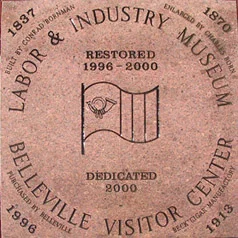
The building which houses the Labor & Industry Museum has four building dates beginning with 1837. Conrad Bornman, believed to be the first German immigrant to Belleville, purchased the lot at the intersection of North Church and East B Streets in 1837.
The 1881 History of St. Clair County relates that Conrad Bornman a blacksmith and strawberry farmer who became interested in brick making and the art of bricklaying, and a fellow blacksmith named Small, were the first German immigrants to Belleville. They were the vanguard of the largest German migration to the State of Illinois, and they and their fellow Germans contributed greatly to the 1830's building boom and to the foundry/industrial "Gilded Age" of Belleville and the Belleville area.
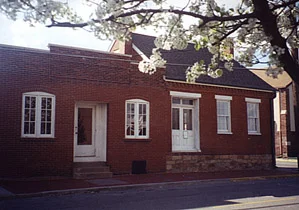
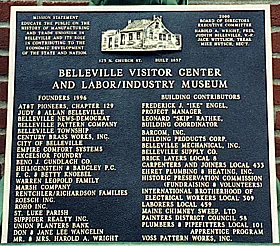
By 1837, Conrad Bornman was 20 years old and had lived in the new world for 19 years. In that year, he built a house at 123 N. Church St. in the town of Belleville - two blocks from the Public Square. It is now the home of the Labor and Industry Museum.
When it was boarded up and slated for demolition in 1995, the Historic Preservation Commission noted that it was the last remaining German Street House in the original town of Belleville as platted in 1814.
Bornman built his 2-½-room house in the classical severity of the "Klassizimus" Style popular in Germany in the 1830's and 1840's. The brick street house is 1-½ stories, with gabled side walls and a cornice of brickwork across the front. The original entry was a single door with sidelights and a transom overhead to catch the summer breezes. The windows are evenly spaced, and the wood lintels are original to the building. The interior of the house has log lintels with the bark still on them. There is a trap door to the cellar, worn pine thresholds and the original stairway and floors.
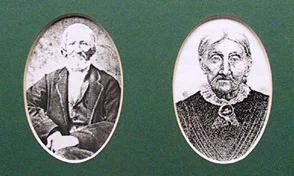
Bornman sold his street house to Charles Born in 1840. Born had emigrated from Germany in 1839 and was a shoemaker by trade -- the 1860 Street Directory lists Born Boot & Shoe Dealer in the first block of N. High St. He also served as a city alderman and city marshal.
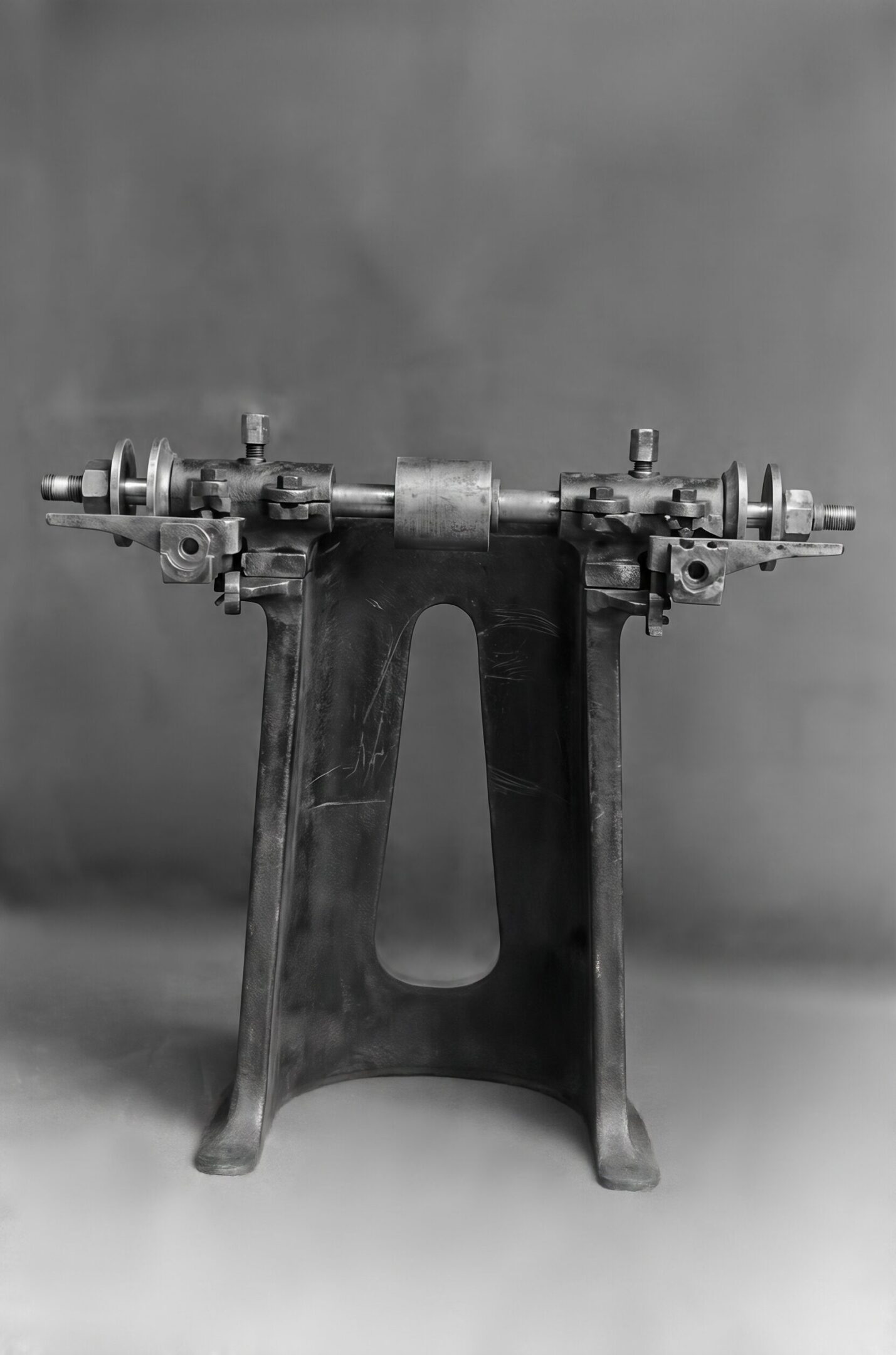
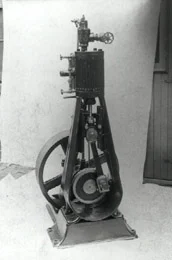
Like Bornman, Born changed careers and opened a machine shop with two of his sons, John Charles and William F. They lived and worked at 123 N. Church St., and the original house was expanded twice before they built a new machine shop at 222 East B St. in 1885. John Charles was the patent holder of six inventions of steam pumps, polishing lathes, and grinders. Charles Born died in 1896, and in 1920 J.C. Born Machine Co. was sold to Columbia Manufacturing Co.
In 1913, the Born family sold the North Church Street building to Charles Beck, who expanded it to house his cigar and tobacco manufactory.
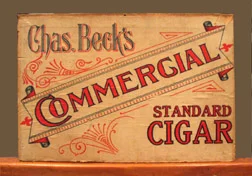
Charles Beck (1867-1933) learned cigar making from Louis Kaemper, a cigar maker at 228 E. Main St. By 1901, Beck had his own shop at 208-210 W. Main St. According to his grandson, Beck fashioned all the equipment used in making cigars, chewing tobacco and pipe tobacco, including a stripping machine, humidor and oven. The giant zinc-lined oven remains in the basement of the museum. The last cigar was made in the building in 1957.
Beck was active in the affairs of the Cigar Maker's Union and served as its vice president. He was instrumental in the formation of the Belleville Trades and Labor Assembly in 1891 and served as that organization's first treasurer.
Beck's son, Sonny, closed the cigar business in 1957, and the building was sold to Everett E. Sakasko, who operated Ed's TV Repair Service. Sakasko's wife, Geraldine, was the proprietor of the "The Lady Orchid" Beauty Salon.
In 1995, the N. Church St. building was purchased by the East-West Gateway Coordinating Council, and the property was to be demolished to provide parking for the St. Clair County Transit District. However, with the cooperation of City and County Government and the Historic Preservation Commission, the City of Belleville Planning Department was given six months to find a use for the building.
Since Belleville did not have a visitors center at that time, the city determined that that would be a good use for the building, and funds were garnered from Downtown Development & Redevelopment, Belleville Tourism, and the Historic Preservation Commission to purchase the building from the Transit District. Additionally, funds would be raised from the public and private sector to restore the building and house a Labor & Industry Museum. The museum would center on Belleville's Gilded Age, 1865 - 1929.
In 1998, an official board was formed to restore the building and develop the museum. The restored building was dedicated December 2000. Almost 1,400 people attended the Grand Opening August 10, 2002.
Museum Renovation

Renovations
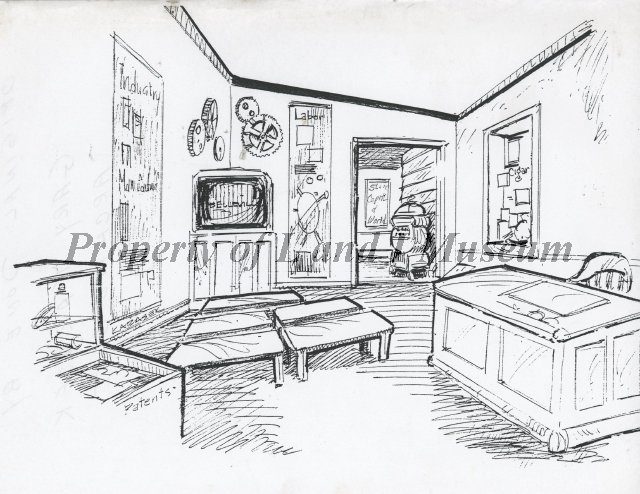
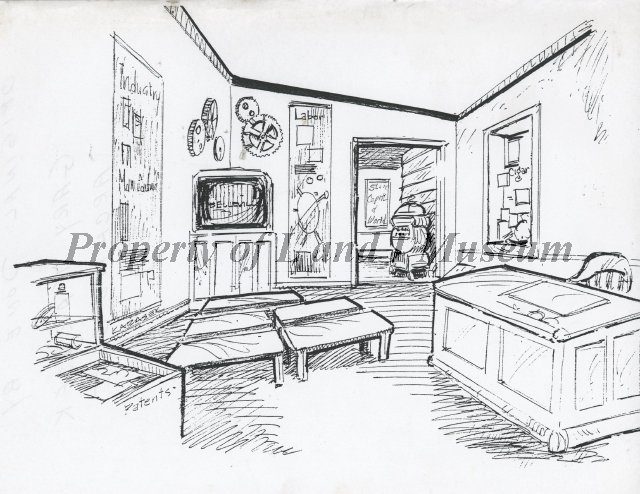
In 1998, an official board was formed to restore the building and develop the museum. The restored building was dedicated in December of 2000. Two years of restoration-conservation work went into the building before any mechanicals or finished carpentry could be accomplished. Three-and-one-half dumpsters of trash, drop ceilings, temporary walls, etc. were removed. This did not include ancient plaster laths from the second floor and buckets and buckets of old plaster, linoleum and other cover-up flooring from the first floor. All of the knob and tube wiring, the old furnace, and the minimal plumbing had to be removed. BUT, there was no kitchen to remove because the building never had a kitchen!!! Since the original building dates from 1837, it had a summer kitchen at the rear. Also, a large brick wall at the rear of the property and a couple of lean-to type walls had to be removed from the premises. Volunteers from our community accomplished all the work. People who work as accountants, business owners, plumbers, County and City employees worked here on weekends.
The stabilization of the building came next. The rear brick wall had to be rebuilt. The original machine shop (now the Industrial Hall) had to be shored up through the center in order to handle the weight of the stoves. The cigar manufactory roof needed to be stabilized to handle the extra weight of the state of the art rubber roof. The staircase had to be rebuilt because half of it was removed in 1913. The original windows no longer existed so new windows had to be installed. Carpenter, Fred Engel, installed the staircase and the new windows. The rear brick wall was rebuilt by bricklayers Roger and Heath Wentz. The foundation parging had to be removed and secured. Brick mason, George Uhl, did that. Again, much of this work, such as the removal of the parging, was done with hours and hours of volunteer help. Volunteers installed the new floor in the Industrial Hall — the job took a complete summer!
Finally, we were ready for new plaster walls, but the building needed to be insulated. That was a job no one wanted to do, but it was accomplished with the help of volunteers. All the walls needed to be "firred out". The Carpenter Apprentice Program did that. The original floors needed to be refinished. That was a volunteer job.
The mechanicals were donated. Belleville Supply Company donated the fixtures for the two handicapped bathrooms, and the Plumbers Apprentice Program handled the installation. Belleville Mechanical donated the heating and cooling system with the installation included. IBEW Local 309 donated all the wiring and electrical work. Painters Local 58 and 85 did all the painting that required professional help.
All the inside and outside doors are original but they needed to be rehung. The bathrooms and office floors have new coverings. Carpenter Fred Engel accomplished these tasks and many more.
Written by Judy Belleville

Grand Opening
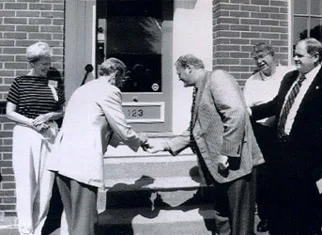
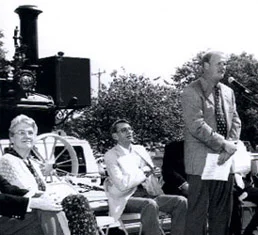
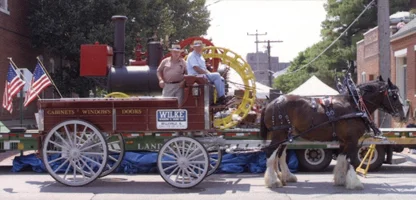
The Labor and Industry Museum celebrated its grand opening on August 10, 2002. Almost 1,400 friends of the museum were in attendance to watch the festivities. Local and state dignitaries helped Museum President Harold Wright cut the official ribbon.
Outside the building various craftsmen displayed talents that were common in the late 19th Century when the building was new.
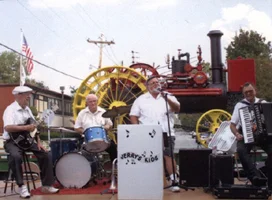
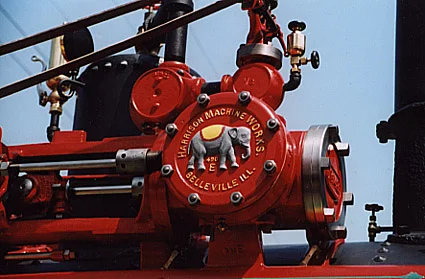
A special addition was the unveiling of Jumbo, the newly renovated Harrison Steam engine. Mike Hutsh and his group proudly showed off the beautiful machine to an appreciative audience.
Special events inside and outside the museum encouraged the crowd to linger for most of the afternoon. Musicians Local 29 provided music, and Board member Bill Thurston and his union workers provided food and drink.
The Labor and Industry Museum is open every Saturday from 10:00 a.m. to 2:00 pm or by appointment.
Grand Opening Photos
The Annex
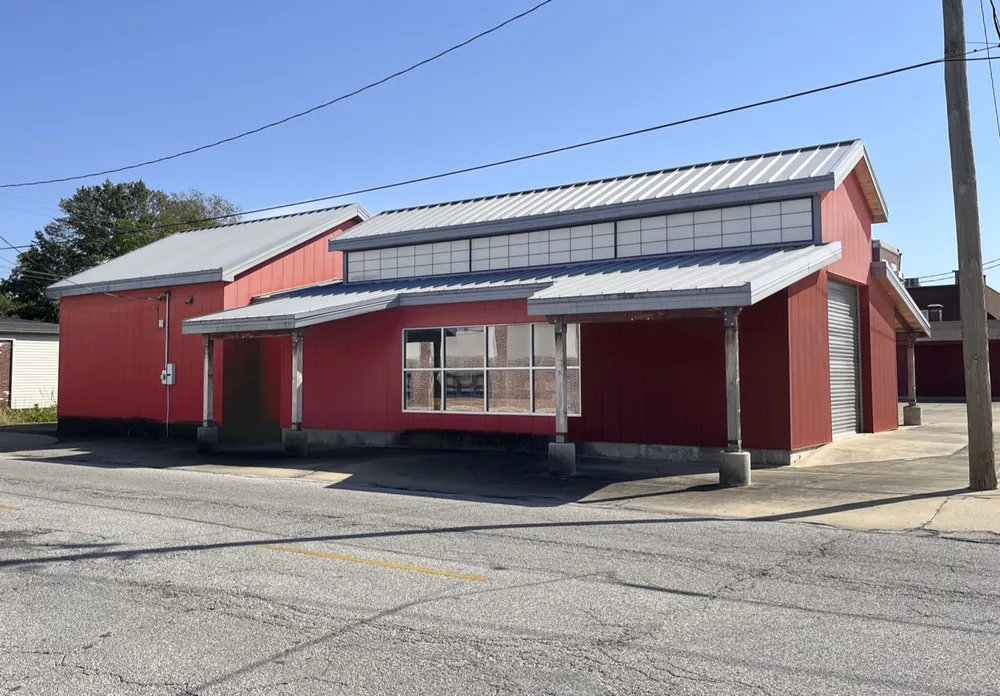
Our Annex is now open to the public. It is located on East 'B' Street immediately behind the museum at 123 North Church Street.
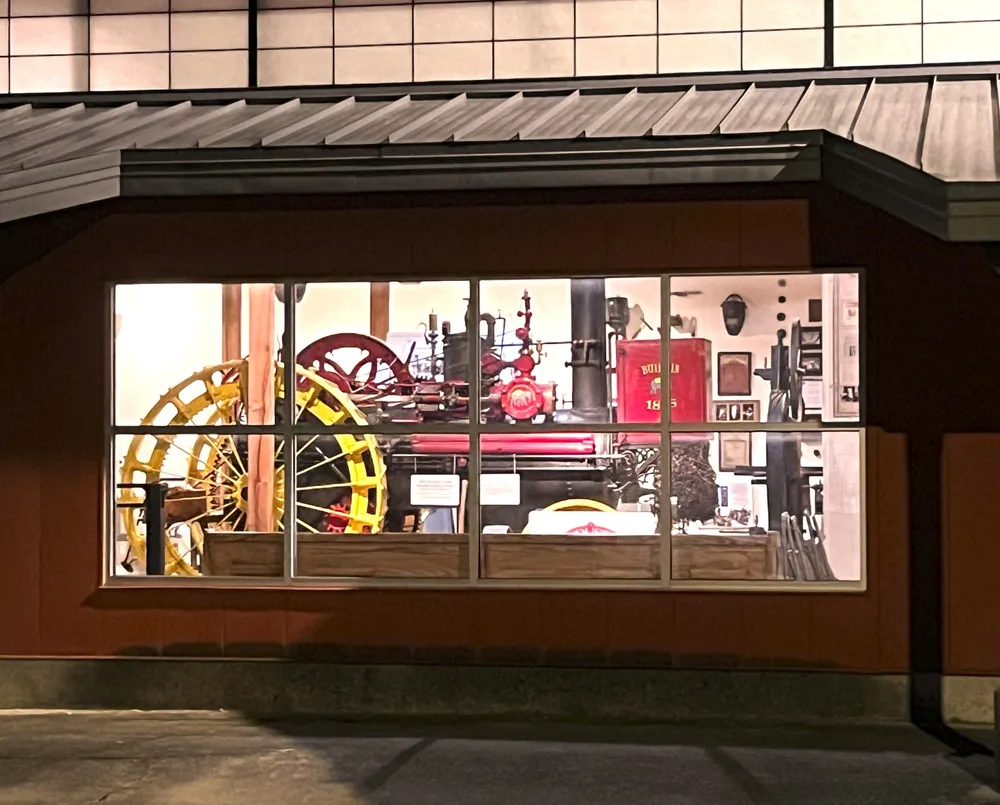
The 12 horsepower Harrison Jumbo steam traction engine, built in Belleville in 1895, found a home in our Annex building. Jumbo was acquired from the Henry Ford Museum and lovingly restored by museum volunteers. It is on permanent display accompanied by numerous artifacts fabricated and/or used by Southwestern Illinois industries. A recent artifact donated by the Harrison family is Jumbo's "little brother", a model steam engine, built by Harrison Machine Work's shop in 1925.
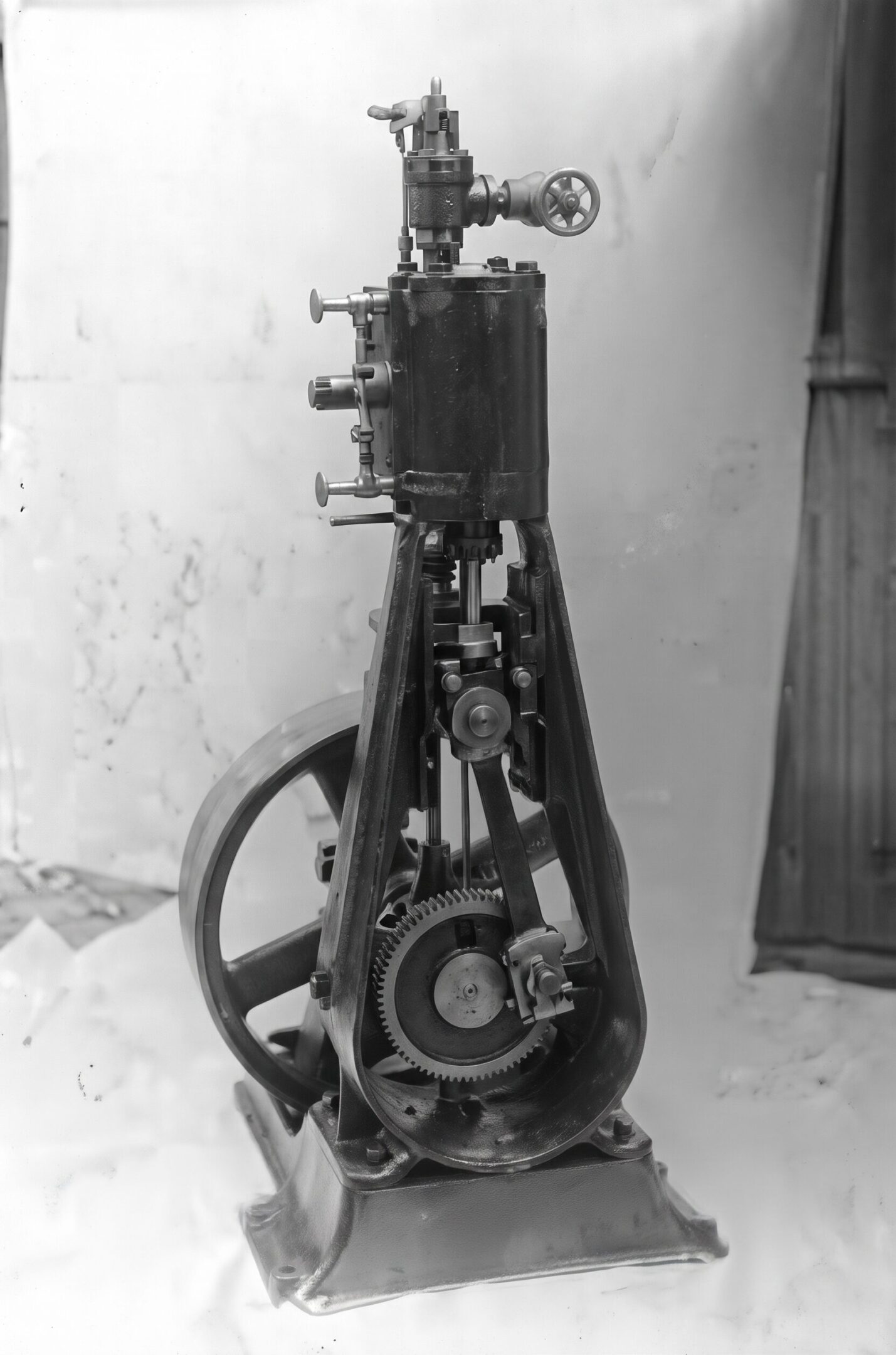
Visitors can view a variety of displays. Displays focus on the area's early German language newspapers and printing, women's roles in local work, our Knepper Racing collection, historical agriculture equipment, Gundlach coal handling equipment and asbestos shingle cutters, the Born single cylinder vertical steam engine used in Imb's Mill, and more. We proudly display a large in-depth history honoring early labor organizer Mother Mary Jones.